Task 1:
There are a few different theories behind the effects of violent video games on the audience. The media has produced lots of different points and opinions on how violent video games affect the audiences they are made for and also affect the audiences that they were not originally intended for, 11 out of 18 people on the survey we conducted as group, had starting playing 18+ rated games before they were 13. The intended audiences are for those who are 18 or over and with over 50% of people who took the survey played 18 games before they were 18 is possibly what led to all the controversy with violence in video games. The hypodermic needle model theory was created by the media due to a "Manhunt murder" which was committed by a 17 year old. The game which allergdly lead him to do this was Manhunt which is rated 18+. Even being one year younger still left him underaged to play this game.
http://www.dailymail.co.uk/news/article-316491/Teenager-gets-life-Manhunt-murder.html
Hypodermic needle model is also known as the hypodermic-syringe model or transmission-belt model or magic bullet theory. Now the reason behind why it is also known as these names is due to the description of the term. A needle is known for injecting something into someone, this model is basically injecting a suggested, intended message into the receiver and the receiver accepts this. Relating to violence within video games, the intended message could possibly be that the game is displaying violence is okay because it is accepted within the game. This links in with passive consumption which is where the player just goes along with whatever the game delivers and continue to play without even question what is going on. Most of the responses to video games in general are active consumption responses. Active consumption is where a player questions a lot of what is going on, why this happening within the game, why something has happened and questions what the game is portraying.
When watching some you tubers, they tend to elaborate on what is going on in the game and question what is going on. Many YouTubers/Gamers in general have different responses from what they take in from a game. Preferred responses are more aimed to the passive consumption side of things as the player just understands the message and agrees with it, no questioning, just accepting it and carrying on with the game. Oppositional responses are responses where the gamer begins to question what is happening within the game and they choose to reject the theory at hand and has an alternate view about it. Negotiated responses are responses where you agree with what the game is going along with and what they are showing them however, they may potentially change what the game is trying to say so it suits their own experiences/interests. Negotiated responses effectively partners with the uses and gratification theory. Uses and Gratification theory is a theory based on the how the audience consumes what is placed before them, how they interpret the media and that they are responsible for how they interpret it. Furthermore, the audiences also are responsible for the media they've chose which fulfils their need. There are four different models which are suggested to fulfil audiences need when we chose that particular media. These four models are Identity, educate, entertain and social interaction. Relating this to games, many people choose to play certain games as it being a way to get away from reality, a way to have fun doing what we want to do, be someone else for a change, to just learn a few things, to compete against others and to possible challenge themselves. However, this saying that we are responsible for what media we choose to indulge ourselves in is criticised by others as many say that "the public has no control over the media and what it produces - do not need to take responsibility for what they produce". http://www.slideshare.net/zlorhenley/uses-and-gratifications-theory-6933502
An advertisement which was made a while back, used reactions to gain interest from the audience. I would agree with the statement that we are responsible for what we indulge in, if we never chosen to become interested in this media exploit then it would of not became so popular. Furthermore, it may fulfil the needs of some rebellious children who in which, like the idea of watching their mother become horrified due to this gory, action full game, it goes against what a mother would recommend which some teens are drawn towards. The Advert I am talking about is"Your Mom Hates Dead Space 2" advert, where they use the idea of where they use negative reactions as a selling point. From a personal view, the fact that these Mums find this game horrifying and disgusting would make rebellious teens want to play and buy the game. However, many others find this way of advertisement falling into the negative region because of the way it was approached. Below are a few of the comments from the YouTube video. They are mixed reviews on the way that this had been advertised.
"If moms hate it then you know it's a good game"
"Hunh, aren't Moms the ones buying this game for their 'rebellious' teenagers? Can't wait for the "Your Dad Hates Dead Space 2" ads to come out. Using stereotypes like this makes the brand feel less edgy, kinda sexist and dated- that's probably counter to what they are trying to achieve"
"This advert is very interesting. What market segment are they targeting with it? The "over 18's who care what their mum thinks" market? Does such a market exist? Of course not. This advert is targeted at children too young to legally play the game. Shame on you"
"ESRB is just a guideline. It's just there to recommend their thoughts on the age suitability of the game." (In reply to the comment above)
https://www.youtube.com/watch?v=nKkPFDEiC6Q
There has always been debates on violent video games, whether they should be banned, whether they should be censored, whether the age restriction should be higher and so on. This is all due to the effects is has on the gamers. As a group we conducted a survey and one of the questions were "Do you think that violent video games affect your mentality when playing other types of games?" and 9 out of 20 said, being exposed to violent content does affect their mentality when it comes to playing games that do not contain violent scenes within them. For example, if you play a game like Dark Souls 3 where you can kill the NPC's and then switch to a game like Stardew Valley where you cannot kill NPC's, some may think that it may be possible to kill them and try it whereas others may just not even have that thought and the play the game casually. This could link in with a few health concerns because of the behaviour that we have chosen to indulge in is the one where we change our thought pattern within games and then possibly it may affect our thought pattern and behaviour within reality.
They are a few health concerns which are related to video games in general. However, the negative health conditions can come from violent video games whereas the positive health care are related to all games in general. Some say that violent video games can influence their behaviour and reactions within the real world, and the reason behind why they are possibly worse than TV or Movies is due to the fact it is the players choice to run in and attack the enemies at their own pace whereas within movies and TV series, it is all played out before you. The positive health care facts which are stated in the positive link below discusses how it can distract someone enough for them to get better/their problem. What the problem was, was an 8 year old boy would not stop picking at his upper lip for a while and " had neurodermatitis and scarring due to continual picking at his upper lip" the treatment that worked was simply giving the child a controller which had distracted him from the continuous picking. The two links below discuss what the positive and negative health care effects they are.
Negative: http://www.health.harvard.edu/newsletter_article/violent-video-games-and-young-people
Positive: https://www.ncbi.nlm.nih.gov/pmc/articles/PMC558687/
Those who believe violent video games are the main culprit for some children's unstable mentality, would possibly agree with censoring out the violent and/or the explicit content within games as this may reduce the numbers of whose behaviours have been influenced by those subjects. Now from a personal take on things, i think they should not be censored and the reason behind why I think games shouldn't be censored is due to style of the game, if a game was a pure fighting game, all of it would most likely be censored out and the game wouldn't be interesting or fun anymore. The age rating already advises what games are suitable for different aged children so that they would not be exposed to violence or explicit scenes so easily. It would most likely be the parents decision to buy them an over 18 game as game shops would not sell them to you if you were under 18. The website below shows a debate on whether video games should be censored. 81% said no and the remaining 19% said they should be. The debate results contained on the webpage from the link , may come from people who are not gamers and are in fact parents. However, when it comes to gamers and if they are not happy or want to tone down a few of the gory parts, violent part, or explicit scenes then they usually mod the game to what suits them. Some gamers may the mod the game to a point where a horror game now has rubber ducks everywhere that you have to shoot instead of really scary monsters. Most games now allow gamers to mod the games to see what bright, innovative ideas they come up with and if those who believe they should be censored could simply mod the game to change a few of the elements so it did not seem so bad. From the survey results. 13 out of 19 people have said they have not been in shock or distress due to a violent scene. What I can interpret from this is that violent video games have desensitised gamers, it allows us to control our emotions better from when we see something distressing/violent.
http://www.debate.org/opinions/should-video-games-be-censored
Survey Results Summary:
2 Female
17 Male
1 = 14 or under
6 = 15 to 17
12 = 18+
11/18 people played an 18+ game before they were 13
Average number of how many hours are spent playing games are roughly 20 hours a week
11/19 said that they play competitive games and they get quite competitive
The genre of games that they play are quite varied, the top three genres were shoot em' ups, Stealth games and Survival games
16/19 said they get frustrated at video games
8/19 said that when they play violent video games , it affects their mentality when playing other types of games
13 people said they have not been shocked by a violent scene or been in distress.
The majority of the survey takes said that they feel okay or have no issue with violence in video games.
Tuesday, 21 February 2017

Wednesday, 1 February 2017
Unit 71: Object-orientated design for computer games
Object-Orientated Design:
Concept and Principles:
Simplified Understanding/Communication:
Simplified understanding is making the coding easier to read, especially going to back to it. What programmers usually do is leave a connotations underneath code so that is also easier for other programmers to understand what they were possibly aiming for/what they have achieved. Below is an example of some code which has connotations underneath so we as the reader and other programmers can understand what is happening here. "//" is the symbol which defines between what we read in English and the rest is C++.

Reusability:
This could apply to possibly models and code. But when it comes to coding, re-usability would also then fall under the inheritance tool if the engine has it. You could also reuse code in different objects if you need the same IF statement or FOR loop etc. When it comes to models, we can re-use them and change what they possibly look like. A good example for this would be the zombies from the CoD series. What happens is, within the waves, a certain amount of zombies would appear each wave. If they created a new model for each and every zombie that appeared, it would take up a lot of time and it would then also be a waste of time because a lot of the time they die to quickly for the players to actually intake what they look like and so on. To conclude, re using models saves developers and designers a lot of time. Making a few alterations does as variety when it comes to it, if every model was the same then it wouldn't be as interesting and fun visually.

You can see from the image above that the zombies are re-used over and over, the two zombies to the right are the exact same design and the main zombie at the front and the far back to the left are also the same. This further justifies the re-use of models.
Maintenance/Efficiency:
Maintenance is going back over the code that you have already created for that object. Something may need to be tweaked or deleted entirely from the code so that the object works either more efficiently or better. Sometimes, the code that you have created for an object may just not work and you need to make quite a few adjustments. Linking back with the simplified understanding, you may need to make some changes so the code is easier to read and understand purely for yourself or for team members. You can change the code you have created so it is more efficient. Having large chunks of code may lead to having a few bugs, and bug hunting in a large chunk of code is not easy. Using states usually tone down how much code you have contained in one chunk and makes it easier for you to understand.
Collaboration/Sharing:
Collaboration could be considered under two terms. The first term is collaborating with your team you are working with. You will need to collaborate with your team to produce something good. If you don't collaborate, not much would be done. The other term of collaboration is getting your code to collaborate with the objects correctly. If they do not collaborate with one another then you would need to go and alter the code so that it does collaborate with the object. Here is an example that I have found.- The Program tells the GameController "Move North"
- The GameController tells the Player to "leave heading north"
- The Player tells its current location to "move me north"
- The Room asks each of its exits "do you head north?". If the exit responds "Yes"...
- Tell the Exit "Move this player"
- The Exit tells the Player "You are now in this room" using its destination Room
When working in a team, sharing out assets and/or code is essential. Making sure that the code is easy to understand, you would be able to effectively share your code amongst others in your team. This is why simplified understand is a must when it comes to sharing. Furthermore, you must be using the same versions of engine so that the code definitely works.
Quality Assurance:
Quality assurance is paying attention to all of the stages of the process, models, codes etc, to a preferred quality. Every game has a certain standard that they must live up to, so quality assurance is checking up on all of the code and models, making sure they meet the desired requirements throughout the whole design process up until everything is complete.
Real-world Modelling:
Real world modelling is creating objects which resemble to something in the real world such as a chair, a table, a water bottle, a barrel, a door etc. However, when it comes to modelling objects to something in the real world, we then assume that we must code that object to work like how it would in the real world. So when it comes to a chair, you would want it to be able to be moved by simply walking into it, you would want it to react to bullets if you shoot it (leave a mark and move it) etc. Although, when it comes to game, you have the choice of whether you want it to follow the rules of how the real world objects would react.
Sprites are 2D images which are usually pixel art of the character, objects, scenery etc. When it came to making a game in GameMaker, you would create sprites to create the design of your character/objects. If you wanted to animate your character or object you would have to create more sprites and then alter them slightly to make an effective animation that works really well. To make sure the animation works, you would code it so that it would flick through the image_index. You can also set a speed for this so you can decide on how quick or how slow the game flicks through the image_index.
Characters are the ones who you are most likely to get attached to within a game. Your player is a character, those who you interact with are characters and your enemies are also classed as characters (dependant on how important they are). Those who are given a name in the game are characters. Most characters have their own name, design, behaviour and animation. This will mean each main character would have their own coding. However, some of the code can be reused such as them colliding or being able to react to other objects. Some have used finite state machines to make sure the character isn't doing two things at once. For example, if you want a character to jump and then somewhere else in the code you can press another button to duck, you don't want them ducking and jumping at the same time. So the FSM only allows one state at a time.
Weapons are highly interact-able. A lot of weapons tend to have unique models, skins and some have very unique animations. A great game which has different weapon animations is Dark Souls 3. Dark souls 3 have a system which is called "Weapon Art". Weapon Art is a unique weapon animation/skill which is specifically for that weapon only. When the player uses two of the key buttons at the same time, and is above 0% stamina, they are able to perform this animation/attack. If the player attempted to use the weapon art with 0% stamina, it would not work fully. If the player triggers the weapon art with over 50% stamina then they would be able to fully use the weapon art attack however, it would take away a certain amount of percentage of stamina when it is used. The link below displays a weapon showcase of different weapons, what their move sets are and what weapon art they have.

https://www.youtube.com/watch?v=IqHDs-0EmUs
Rewards within games are usually given when the player has done a certain something. A great example of this would be Black Ops 2 Zombies. If you complete a certain challenge within that zombie match, you would hear a noise and a symbol would pop up above your perks in the bottom left, this indicates the player that they have a "reward" waiting for them because they just completed something. Using sounds and simple visuals is a great way to alert the player that they have done something correctly and in the zombies, this was very effective. The way this may work with code is that, if the player completes, let's say, "101 headshots", it would have a keep a counter of how many times the object bullet has destroyed a zombies head hitbox. Once 101 has been achieved, it would trigger an event in which will play: sound and display a sprite in the HUD.

Rewards can also be given in permanent achievements which will stay on the platform that you have played the game on. They basically reward the player for them achieving something which is either quite difficult or for just simply for playing for so many hours and so on. They make the player strive towards putting in many more hours into the game and makes the player feel more valued for how many hours they have already put into the game.
Instances:
Instances are made from objects and are given pre-defined variables (in GameMaker). They are virtually copies of objects that you can place in the room and you can choose where it is placed, change its variables, you can deactivate them, activate them etc. In my Shape Man game, I would de-activate the walls every so often so that more of the enemies can come out once they have spawned in.
Object Properties:
Object properties covers a large section of the design elements to the objects. This is the colour, size, movements, speed, sounds, health, lives etc. A good example of a few of these properties combined is a boss from the game "The Binding of Isaac: Afterbirth". "Greed" the boss from a Greed run is a great example of these object properties coming into play visually. The link below is a YouTube video that I have found which shows the boss eventually being defeated. You will notice as the fight goes on, the colour of the boss will slowly turn into a dark red colour, his movement becomes quicker and the movement of the boss is repetitive so the player can recognise what his next move is. What would happen here is, once the boss has dropped to 75% heath, his speed code is upped from 4 to possibly 5 and then when his health has dropped to 60% his speed would then raise to 6 and so on. As for the colour, it could possibly work in the same way. So when his health has reached a certain percentage then the sprite changes to a shade of red and gradually gets duller and duller.


https://www.youtube.com/watch?v=4vakcS4USJA
As you can see from the images above, the start of the boss battle the boss is grey and then when the boss is really injured, he gains a red tone to his body. Furthermore, in the video, you can see that his stomps change in pace the more injured he becomes.
Rooms and Scenery:
When it comes to making a room, you have a lot to consider; the size, what is placed in that room, the colour, the design etc. In GameMaker you can decide on the background colour, what instances are placed within the room, change the scale and change the speed of the room and more. When you have created a room, you can have multiple rooms and link them together with code. For example, if you have an instance which is called "Portal" then you can code that so once "player" has collided with "portal" then it goes to the next room, which would be whatever is after "Room0" or what you have named it. In Unreal Engine, you can create a landscape which is you can adjust the scale, section sizes, sections per component, number of components and overall resolution. Once this is created, you can then add some terrain to the flat landscape by using the sculpt tools. The scenery is placing objects to create a scene within the room/landscape. Animations and code can be assigned to the scenery. The scenery would be made up with either a bunch of different instances/objects or sculpting the landscape.
Bonuses and Power-ups:
Power ups and bonuses within games simply are there to make the game play a little easier and also to make the player feel more "powerful". When it comes to a power up, for it to work, there must be a timer in which it counts down from. For example, before I picked up a power-up i had 3 speed and have 50 health, once I collide with the power-up instance, I now have 5 speed and 100 health. From the point my values change, the counter will start to decrease, then once the counter reaches 0 it will change my stats back to the original stats which was 3 speed and 50 health. A good example of a power-up would be from the classic game of Pac-Man. In the video below, the player goes around and starts picking up little pellets, however when he eats one of the larger pellets in the corners, all of the enemies change to one colour and Pac-Man is able to eat them. Basically making Pac-Man invincible. He also receives bonus points from eating the enemies which adds on to his high score at the top of the screen. The score doubles each time he eats an enemy, first 200, then 400, then 800 and then finally 1600.

https://www.youtube.com/watch?v=-CbyAk3Sn9I
Actions and Events:
Create and Destroy:
The create and destroy system is fairly simple when thinking about it. A great example for the create and destroy events would be a shoot em' up game. When a player presses their trigger, it would activate an event which would "create" the bullet. The path can either go down one of the three routes. One route could be, if the bullet doesn't hit a player and hits an object then it would destroy. The second route could be, if the bullet hits the player/enemy, it would take away, lets say 10% health away, and then destroy itself. The last route could be if the bullet hits the player, it would take away 10% health AND if the player/enemy has 0% health after the previous 10% as been taken away then it would destroy itself and the other player/enemy.
Mouse and Keyboard:
Mouse and Keyboard events are events which are then triggered by either using the mouse or the keyboard. With the mouse triggered events, this could include simply hovering the mouse over a certain object or note, clicking on a certain object or simple clicking, holding and dragging an item to activate an event. With the keyboard, this could be as simply as pressing one key or multiple keys to trigger an event. Below are a few of the code names for mouse and keys. In a game such as surgeon simulator, the movement of the mouse and the AWER and SPACE keys on the keyboard are important. When the mouse moves to left then the object_hand (example) moves to the left and its the same with whichever direction the mouse is moved in. The keys come into play once you want to grab hold of something, you need to hold down the AWER and SPACE keys. Well the keys actually control individual fingers which makes the game harder. So if the player just holds down W and E only two finger would change to the grabbing animation and for however long they are held down, it would stay in that state. The other fingers would not move due to no other buttons are being held down. The link below is a video which shows the controls of surgeon simulator and how it works.


https://www.youtube.com/watch?v=PBd5i52OvZ4
Timers:
Time events are events which are triggered and then a countdown starts or a timer. Time events can be used for all sorts, could be to simply countdown a bomb, to something which is more in the background scheme of things such as counting down a timer until another enemy spawns in or another player can spawn in. A great example of a time event (personally what I believe to be one of the best visual timer events) is from the game Crash Bandicoot Warped (3). Once you have completed that level, you can go back and see if you can beat that level within a certain time limit. To trigger the time events within this game is you hit the golden clock at the beginning of the level and then you race through the level as fast as you can. The best ranking relic is the platinum one and the lowest ranking relic is the blue one. These time events contribute to fully completing the game and interests the player into playing all of the levels in the game, over again. As soon as the character has touched the object_clock (for example) it has triggered the event of the timer where it counts up until the player has either lost all of his health or has reached the end of the level (this could be that the character model has triggered an invisible wall possible at the end of the level which then triggers for the timer to stop and display the time on the screen. Furthermore, if the player has reached the invisible wall or trigger in a time between 2:20 and 2:40 then the player is awarded with object_blue_relic (for example), if the player has reached the invisible wall or trigger in a time between 1:50 and 2:19 then the player is awarded with object_gold_relic and if the player has reached the invisible wall or trigger in a time lower than 1:49 then the player is awarded with object_platinum_relic.

More Key/Button events:
The next generation Tomb Raider's contain quicktime events which rushes the player to press a sequence of buttons or a button to get out of certain situations quickly. These quick time events are events which just get the player to react quickly within the game. On PC this could be a sequence of different keys and on the Xbox/PlayStation this could be flicking the analogue stick back and forth or pressing the correct button. The coding for this section must have alternate paths it could follow. When the event has started, a timer starts to count down, within the time limit the player has to press the correct button, if the player does not press the correct button, this will then trigger an event and end that event altogether until it restarts. If the player does press the correct button then it will follow the blueprint to another event where it starts another timer and displays another button for the player to press and so on. Once all the correct the buttons have been pressed the event is ended.


https://www.youtube.com/watch?v=U0xcwWFsSGY
Scoring:
A scoring system is a great way at making a game competitive, some of the most popular games to this day have a simple scoring system which makes it simple objective to complete. However, keeping score within games is quite varied and some games use the typical points system as in, if you score a goal that is 1 point to that team. In a game like CoD: Zombies, it contains a different way of keeping score. The score that is kept is how many points that you have collected by killing zombies, re boarding windows and reviving people. Throughout the game, the points can be spent to get better weapons and such so that it is easier to play when the waves become harder. The points are all kept in a table which you can see whenever you like in the game. What also is kept is how many head shots, revives and downs everyone has. All the points are for the individuals themselves too. Each head shot is equivalent to 1 score added onto your head shots counters, same with the downs and revives. However, when it comes to the main source of you points, killing a zombie can range with the amount of points given to you. You gain more points from a head shot/melee than from just shooting the body of the zombie and it dies. This design is quite a clever design due to the playing needing points to progress through the level. The way this possibly works within the code is that if the the object "bullet" has hit the chest region then the player is awarded with +50 points let's say. If the object "bullet" has hit the hitbox for "head" then the player is awarded with +100 points and so on.
Collisions/Walls:
When a player interacts with objects in a game, they have different ways of being able to interact with them. A game which I personally have the most fun with colliding with objects in Dark Souls 3. The reason behind why I have chosen this game as an example for collision events is due to how many objects you can break with the player. Furthermore, another example for a collision event within Dark Souls 3 are the illusion walls in which the player must roll/hit. The link below shows the player within the Dark Souls 3 hitting all of the walls with his sword. Around 8:50 minutes in, you see the player rolling into the objects and breaking them to (this links back to the collision side of things with certain objects). The images below are just two images that display where two of the illusory walls are placed within the game. The way this must work within the coding is that, as soon as a player action has hit the object, it would trigger an event such as removing the instance or activating an animation which shows the object being broken (dependant on the object!). That is a simple way of looking at how the design of the code may look like.


https://www.youtube.com/watch?v=M7boShZeGiA
Other games may just contain simple collisions such as the playing being unable to walk through a wall, a rock, a table, a chair etc. When using the Unreal Engine, you are able to change the collision markings of an object, you could have complex ones or simple ones. Complex collisions are collision markings which try to line up perfectly with everything on your object. Below is an example of the collision for the model that I have made in maya and imported over to Unreal Engine.

Inheritance:
Inheritance is a great way to create variants of the same object. For example, a parent would contain the main source of code and child would carry over this code however you would add extras pieces of code to it. So, you could have a class and then sub classes. A game that I created used the inheritance tool on Game Maker. I created an object in which had the main source of code however I wanted to create more enemies but they all had something different about them. So all of the objects would fall down the screen, disappear when the bullet had interacted with it (hit it) and would destroy itself if it reached the bottom of the screen. However what made them different was what they would do, so some of the enemies would have a glow around them and some would shoot back whereas others just fell. A game which has a similar concept to this is CoD: zombies. A few of the zombies *when got the perk Vulture Aid* would have a green glow around them however they still behaved like the others zombies. What this green mist would do is just cover you in a smell if you sit in it and would allow the zombies to ignore you. Below is a video link and an image, around 2:10 mins, the video displays what I have discussed above in practise.

https://www.youtube.com/watch?v=-dlewG2s1zk
Wednesday, 18 January 2017
Unit 66: 3D Modelling
Be
able to create 3D models following industry practice
 To start of the model I needed some guidance from image planes so I can make the generic shape of a human body. I then used the cube polygon to create the body, using the shortcut keys F8, F9, F10 and F11 I was able to quickly switch between object selection, vertex selection, edge selection and face selection. I changed the subdivision width and height to add in more vertices and edges so I could mould the polygon into the body shape. Selecting the vertices and moving them up down with the shortcut key "W" allowed me to mould the cube even easier. I then did the same routine with the right leg, the right foot and the right arm. I used a cube polygon, selected the vertices/edges and moulded the shape by moving/resizing the shape to fit the arm/leg. I did all of the moulding from the front perspective, when switching to the side view the polygons were all too fat, using a side view image plane helped me adjust the body parts to the correct shape and proportions.
  This screenshot shows four polygons moulded into shape, the problem here is that they are all separate. What I did to combine them together was first clicked on all the pieces whilst holding shift and used the combine tool. What this did was grouped them together. The pivot tool was off centre at this point so I used the "center pivot" tool to move the pivot back to the center of the model. Then in edge mode I selected all of the edges that would not be seen if I connected the polygons altogether. These areas were the top part of the leg, the top part of the shoe and the inner shoulder. Once I had removed the edges, I then removed the vertices then was connected to the edges. The reason behind why I did this was due to making it easier when connecting the vertices together if they had the same amount of vertices in each area I was connecting to. For example, the inner shoulder could of had 6 vertices and on the body where I want to attach it to, has 4 vertices. I would need to take away 2 vertices in the inner shoulder for it to fit right. When I had finished with vertices and edges changes, I then used the target weld tool in vertex selection to weld the polygons together.
Once I had finished welding body parts together, I selected half of the body using the face selection tool and pressed delete. The reason behind this is, when I mirror the body, it will have a nice cut to the join up the pieces together. I did the same technique joining these halves together as I did combining the body parts to the body.

My next aim to focus on was creating the head for the body. I wanted the head to be quite different from a human head, considering the model is going to be a killer clown, an abnormal head would give it that creep factor. I started off with the basic cube polygon and used the same technique as before when moulding the shape of the body.

I combined the head to the rest of the body using combine and then used target weld to merge it. Then for the face features I used the face selection took, selected certain faces and then used the extrude tool to either push in the faces into the face or pulled out the faces from the face. For the nose and hair I pulled out the faces and for the eyes I pushed in the faces.

I decided that I didn't particularly like the face that I created and started the head again with another cube polygon. I moulded the shape of the head before combining and target welding it to the main body. Giving the face a bigger smile and angled eyes gave the clown a fierce yet creepy look. Furthermore, stretching the smile gave the mouth a defined, sharp look which looked really effective. The parts of clothing that you can see in the screenshot were created using the extrude tool whilst having a number of specific faces selected. For the hand, I again, extruded faces from a cube polygon and used the rotate tool to curve the extruded pieces to create curved fingers. The floating party hat above the head is made from a cone polygon which I just made smaller.

Evaluation:
Half way through the making process of this model, I changed the design of the head as I was not overly pleased with the outcome of it every time I smoothed out the edges. The look was not scary and that was not what I was aiming for. The neck is a little too long for a human neck so if I did remake it I would remake the neck so it wasn't so tall. Furthermore, I made the model bold as I could not agree on a great clown hairstyle that looked okay for the model, however, leaving it bold was a good option and meant that I could add a party hat with ease. On the whole, I think that the model is fabulous in it's pink shirt and blue trousers.
Feedback:
Josh Howitt: Smashed it! I really like it. It fits with the art style.
Kori: What would make it more creepy is either a moustache or glasses.
Tuesday, 29 November 2016
Unit 6: Critical Approaches to creative media products - Assignment 1: Task 1 + Task 2
Critical Approaches to creative media products
Audience research is research which is purely focused on the audience. The kind of results that you gather are about the audiences preferences, interests, attitudes etc. Finding out their interests would help define what aspects I would like in my game.Quantitative research is very specific and narrowed down whereas qualitative research allows freedom for the in-depth responses.When using qualitative audience research, you are able to engage with a smaller audience to then gather in-depth information back. However, when going with the quantitative audience research approach, you are able to engage with a larger audience and collect a large sum of statistical,brief information back. Combining the two types of audience research really helps define what kind of audience in particular you are working with. Quantitative audience research can be gathered by using methods such as audience ratings and measurement panels whereas, qualitative audience research can be gathered by doing interviews and questionnaires. Audience classification is another route into audience research. It means defining your target audience, Socio-economic audiences is one way of audience classification. Socio-economic audiences are divided up into a grading system; A - Upper Class (Professionals, Doctors, Lawyers), B - Middle Class (Teachers), C - Lower Class (Nurses, Clerical), C2 - Skilled Working Class (Trades Person), D - Working Class (Semi-skilled and Unskilled) and E - unemployed, students, pensioners. This will help with the approach of deciding how much your product would be priced at. If you gain an audience in which the majority fall into the E class, then you would aim your products price lower due to the amount of income that they have. If you aim for your product to be a high price then you may want to target your audience further towards the top of the system. Psychographics is a term for consumers personality traits; personalities, beliefs and attitudes and interests. These are other alternate ways for gather information rather than just using gender and age to define your audience. I began to research what sort of audience ratings the film got. On "Rotten Tomatoes" website, this movie has a "Tomatometer:71%". What the "Tomatometer" is, is the percentage of how many critics would recommend the movie and in this case, 71% of approved critics would recommend the movie. 17 reviews has been counted on this site for the movie, 12 of them were fresh tomatoes and 5 were rotten. 59% of the audience liked the film and the remaining 41% didn't. The critics say "Killer Klowns from Outer Space's title promise darkly goofy fun and more often than not, the movie delivers". After reading up on the rotten tomatoes website,it gave me a good idea on how many people enjoyed the film and reading what the critic said, it gave me a good idea on what they enjoyed about the film. I have conducted two questionnaires in which use qualitative and quantitative data. The first questionnaire which I conducted was called "Killer Klowns Film Review". These questionnaires were put onto survey monkey which allowed for anyone to answer them. The first question which I asked was whether the people who answered the questionnaire male or female, 17 people were male and 2 were female.
The next question gathered data on how old the people were; 10 were 17, 3 were 18 and 5 were 19+.

The third question was asking the people for their opinion on the film, however I gave them a mutiple choice instead of allowing them to write down their thoughts, 3 people liked the film, 8 thought it was okay, 5 disliked the film and 3 hated the film. The next question adds onto this question, I ask them to write down the reason why they chose what they chose in question 3. This question delves in the qualitative research side as I am allowing them to answer in depth whereas the first 3 questions were quantitative questions which gave me solid and brief results which was what I needed to define my audience.

Above are a few of the responses I have back from the people who answered the question. As you can see there are similarities with some of the responses whereas a few others have gone into depth with their answer and added a few more comments. My next question was another qualitative question which allowed them to answer more in depth.

Above is an image of the results. A few of the results were very brief, I was hoping for the majority of the responses to be more in depth rather than have a few words which are the same.
My next question was asking whether the film was made well, 13 out of 19 people thought the film wasn't made well whereas the rest thought it was. This question was a simple yes or no answer. My seventh question I believe was the most successful at getting in depth responses. The question was "Do you believe the film was lacking in some aspects?".

Overall, I believe this questionnaire was successful at gathering information about peoples opinions on the Killer Klown film. The majority of the people who took my survey were young and male so I feel as if I could have done with a few more females to average out the gender ratio and to have a few more older people take the questionnaire. The age and averaging out of gender may have made a difference or it may have not.
 My second questionnaire was going into detail on, if I made a game, what would they prefer. The first question I asked was whether they preferred a shooter or a stealth game. The majority preferred the shooter version rather than the stealth version which is something that I wasn't quite sure on as my idea for the game was to be more stealth and assassinations then shooting. The image to the left shows the results of the first question.
This image to the left is a screenshot on the results from the second question. I feel as if the results from this question were heavily influenced by the other question as most people prefer first person shooters than third person shooters.

The results for this are varied. Although, the majority of the vote went for a horror/gory game which goes against what the film was whereas, the next highest voted choice was for the game to be funny and that is the genre of the film.

For the fourth question, I got great results. Relating back to the film, I got them to tell me what they would like from the film in the game. The majority of the responses I got back were very different. This gave me a real insight into what people wanted and it gave me many ideas to think about.

I believe I should have asked a few more questions based on the socio-economic side to find out more of my audiences background and then ask a few more questions which relate with the psychographics to find out more about the audiences personality. The balance between the quantitative questions and qualitative questions was quite even, a few of the results I got back were in-depth whereas a few weren't. The lack of in-depth answers proved to me the little interest that they had the film in overall.
Task 2:
Title: The Last of US
Genre: Action-Adventure, Survival, Horror.
Selection of Content: Dark, Apocalyptic world,
Construction of Content: Narrative
Narrative Conventions: Story Driven game, apocalyptic, need a cure.
Codes and Conventions: Health, Killing a horde of enemies, variety of use of weapons, third person.
Target Demographic: Young Adults
Title: Thief: The Dark Project
Genre: Stealth
Selection of Content: Dark, first person, fantasy/middle-ages,
Construction of Content: 12 Levels
Narrative Conventions: Three organisations, protagonist pursues a life of thievery, wanted for failure to pay a protection fee
Codes and Conventions: Visibility gem, Health Bar, parts of the HUD disappears when items are not in use, First- Person.
Target Demographic: Young Adults (Majority Males)
Title: Lost Circus
Genre: Stealth
Selection of Content: Dark, Cold, Carnival/Circus, fantasy
Construction of Content: 3 Levels
Narrative: Protagonist Abandoned in unknown place, uncover whats happened with the place and the odd doll, escape
Codes and Conventions: Health, Stamina, Visibility, Third person, variety of weapons
Target Demographic: Teens/Young adults
Media Text:
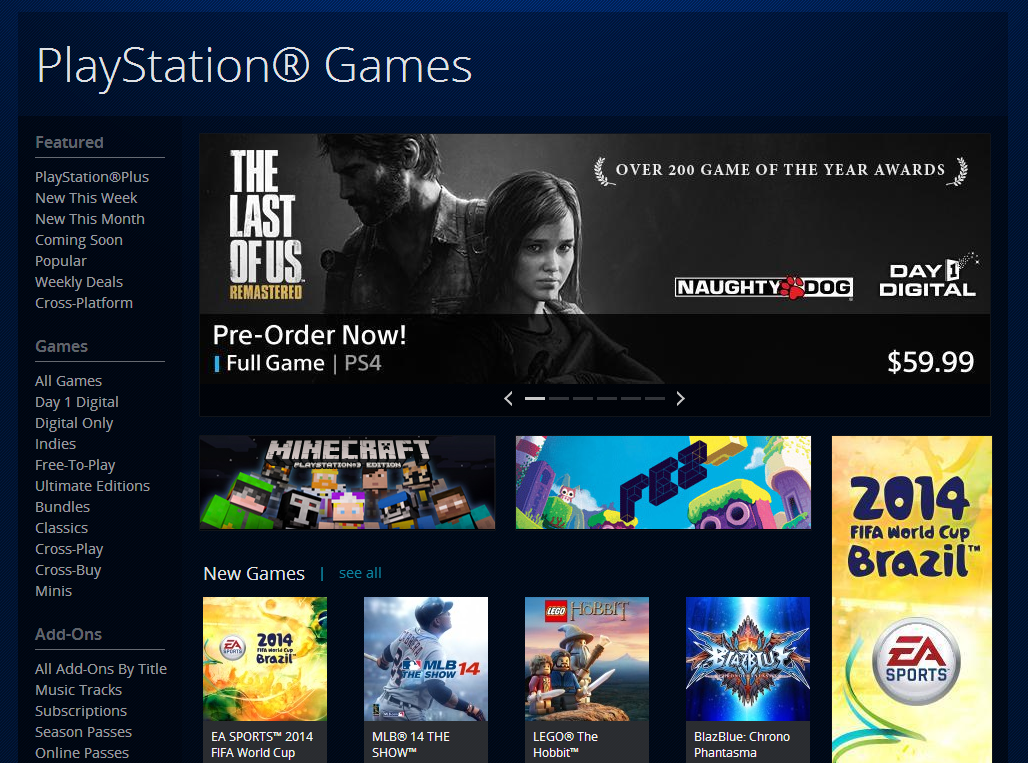
Media Text is information in which can be viewed by the public. Examples of this are; Advertisements, Posters, TV Commercials, leaflets, magazines, etc. The Last of Us for example has advertised using trailers and posters but also advertised on the PlayStation home page which is a strong contender for when wanting to advertise a game, place an advert on the gaming console itself. The content that is displayed in the trailer and the age disclaimer at the bottom of the advert at the start, shows that there is violence and that the game is aimed towards and adults/teens. The dull colours and the derelict world really emphasises the apocalyptic theme within the game and the start really emphasises this. Below are three examples of the advertisement they have created for the game, the last one is the reveal at E3 which is a huge event where future games are showcased.
Thief: The Dark Project was a game which was first advertised in 1997 E3 so, the graphics to the trailer isn't the best compared to what we watch now. The game is very dark and again contains violence so this game is towards towards adults/teens.
Lost Circus: The way I would go ahead with advertisement is how The Last of Us had advertised their game. They advertised using video commercial/trailer and advertising the game on the platform that it is made on. Both games above have been advertised at E3 which really gained a lot of attention so that is something that would really be beneficial. However, considering it is a relatively small game that would most likely be released on PC, for it to be advertised on Steam would be a plus.
Genre:
A system has been developed to file through all of the different types of films/games/programs and this system is known as Genres. When it comes to video games, there are lots and lots of different genres and this helps the players find games which they prefer playing easier. Some genres are a lot more generic than others, for example; Shooters, FPS (First-Person Shooters) and TPS (Third-Person Shooters). Lots of other genres consist of; RPG, Puzzle, Simulations, Platforms, Sports, Strategy, Dance/Rhythm, Survival Horror, Fighting, Action, MMO, Fantasy, etc. [1] More than one genre can be used to describe the game, The last of Us is an action-adventure, survival horror game, ARK: survival evolved is an Action-Adventure, Survival, open-world game. Defining the games more narrowly helps narrow down the search for what the players are looking for/interested in. My game fits into a few of the genres that the Thief: The Dark Project fits into more than The Last of Us as the Lost Circus is dark, cold and Fantasy based.
Selection of Content:
The selection of content is, what are the creative points of the game? What are the colours that have been used, the tones, the fonts used and the sounds? Furthermore, why have they chose that content? For the game series "Dark Souls" they have used dark colours and tones throughout their games and this reflects upon the story and the nature of the game. My game is going to contain dark colours and tones which is similar to Thief: The Dark Project more than The Last of Us. The colours contained within the The Last of Us are quite still quite bright but that just makes the game environment appear beautiful despite being in apocalyptic world whereas where in my game, I want to portray the darkness that looms over the circus and the story.
Construction of Content:
The construction of content is what the games layout is, whether the narrative is prominent or not and how the game is constructed. This meaning if it has levels, what is guiding the player through the levels, is it the story, or is it something else. In this case, what is guiding my player through the levels are quests. The first quest would be to investigate the area they have awoken in and then to investigate the strange music and so on. Again, this is then similar to the Thief: The Dark Project game than The Last of US as Thief has levels.
Codes and Conventions:
Codes and Conventions are the visual elements to game, such as the HUD. Semiotics is a big play for this subject. Semiotics is a study of symbols and the meaning behind them, this relates to the HUD. For example; In Dark Souls 3, The red line at the top symbols health, the blue bar symbols your mana/magic/attunement and the green bar symbolises your stamina. When the bar is empty it means you are either dead *red*, Can't use anymore magic *Blue* or you can't run for a certain amount of time *Green*. Even in ESO (Elder Scrolls Online), the HUD contains a red line at the bottom which is your health, the green bar in the bottom right is your stamina and the blue bar in the bottom left is your mana/magic. These 3 colours really help gamers define what is what on the HUD. What my game is going to have bits and pieces similar to both games, such as a Health bar, variety of weapons and a HUD which disappears when items are not in use.

With coloured bars being an indication to what they are used for, symbols can also be used. For example; in the game "ARK: Survival Evolved" they use a variety of symbols in the bottom right for your character. Usually, the names would not be hovering over the symbols however, the names help new players understand the symbols. The symbols help the players quickly read what they symbolise rather than reading actual words to find out what is wrong with their character.

Target Demographic: Target Demographic is who you are trying to make your game appealing to. This could be a particular gender, age, background etc. Games which are photo realistic are more appealing to adults than children and children would more drawn to games which are bright and colourful. Furthermore, when finding your target audience, it is ideal to do lots of market research. If you half heart the market research, you may end up in fault for not appealing to one sex more than than the other when actually you want it to appeal to both. My game I would like to appeal to both genders and teens/adults. The Last of Us appealed to both genders of gamers however I believe to think that Thief: The Dark Project appealed to more males than females.
[1] http://www.thocp.net/software/games/reference/genres.htm
Unit: 66/67 3D Modelling Assignment 2
Assignment 2: Be able to devise 3D models
Client Brief/Own Brief:
The Client brief is for the game to relate to the movie "Killer Klowns from Outer Space". The brief can be interpreted in many ways and is left open for us to do so.
Below is a link to my blog which contains my own briefs and ideas for the game. It includes three different game brief ideas and model ideas.
http://amyjadeflanagan.blogspot.co.uk/2016/11/killer-klown-game-brief.html
Below is my Padlet link. My Padlet contains lots of ideas for the models that I am going to create to be put into my game. It contains a few ideas for the environment, the weapons, the enemy models, colour schemes and generates the atmosphere that I want to create.
https://padlet.com/wall/474zsva3c91u
Video Link:
https://www.youtube.com/watch?v=WVyA79MkTuI&feature=youtu.be
Legal & Ethical Considerations:
Killer Clowns in the Media: In late 2016 around October time was a huge "craze" of Killer Clowns. The craze originally started off in America and then it began to spread to the UK. With this craze, it left the subject of creating a game about the film "Killer Klowns from Outer Space" sensitive. Therefor this being a sensitive subject it may be difficult to gain public interest. Many news reporters and the general public has reported many sightings of people dressed up as clowns, many were suspected to be wielding weapons whereas few others were dressing up to genuinely scare others.
The link below is a reference to where the craze started and where it spread to. Furthermore, of suspected people dressed up as a clown and potentially holding a weapon.
http://www.usatoday.com/story/news/world/2016/10/12/killer-clown-craze-united-kingdom-canada-australia/91936098/
This link below is another example of the news reporting sightings of killer clowns in the UK.
http://www.bbc.co.uk/news/world-europe-37612735
Age Rating: Legally, the game would need be appropriately rated. PEGI have a system which The age rating that I would give my game is a 16. I have read up on the PEGI ratings system and looked through each of the PEGI age ratings to see which one best fits the game idea I have in mind. PEGI 16 is a rating which allows violence/sexual activity which is how it would play out in real life. PEGI 18 on the other hand takes it to the next level to the point where this violence becomes gross violence, something that would make the player "feel a sense of revulsion".
Religion: The game taps into the religious side slightly as in the brief I created, I had the idea of a spirit in a doll. The spirit would be a young girl which was killed by the enemies in the game (the Killer Klowns) and she seeks revenge however, she helps you out so you do not end the same way as her. There are many different views upon ghosts/possession and dark spirits. As possession/ghosts and dark spirits are a sensitive subject, understanding the full potential behind the three and defining what sort of "spirit/possession/ghost" this is, is quite difficult. After doing some research, possession usually falls under the definition of a "demon" and devising the dialogue for the young girl, I would not want her to use the wrong terminology.
Gender/Race: If left all the clowns to be male and the main character to be female there would be many interpretations into what this means. The interpretations could either be seen in a positive light or a negative one. For example, the female is no longer a damsel in distress which needs to be saved, furthermore she is the main character and not a supporting role to a male. A negative could be seen as, if the enemies are all male then it means that there would be no female villains and would then place a bad name on men as if they are the only ones that would kill and women would not. The enemies are going to be mixed race and mixed in gender. I have took into consideration the race of the main character and she is going to be a British young female whereas the race of the enemies and the young spirit is mixed.
Specifications:
When wanting to import my own textures that I create for the landscape in Unreal Engine 4 and for models in Maya, I figure that it would be best to save the images as "Save for Web" or "Taiga" as this would then keep the resolution and it would reduce the file size. Another consideration is to keep the poly count down at a nice number due to the amount of models that it going to be implemented within the game. I wouldn't want the poly count down too low due to the style I would like my game to portray. The constraints that I have is time, making the models, texturing them and them importing them and placing them in Unreal consumes a lot of time so I the pre-production planning would come in handy and would help me keep focused on what I want to create and not just creating/texturing models from no-where.
Wednesday, 23 November 2016
Killer Klown Game Brief
Killer Klown Brief:
AI:
Enemies Chasing you (Killer Klowns? People?)
Concept Art:
Image Planes for Maya
Character Sketches
Landscape sketches
Building ideas (Circus Tents/Fountain/Lamp Post/)
Intractable objects (Glass shards/Doll)
Models:
Maya models;
Clowns
People
Weapons
AI:
Enemies Chasing you (Killer Klowns? People?)
Concept Art:
Image Planes for Maya
Character Sketches
Landscape sketches
Building ideas (Circus Tents/Fountain/Lamp Post/)
Intractable objects (Glass shards/Doll)
Models:
Maya models;
Clowns
People
Weapons
Killer Klown
Game Ideas:
Idea one:
Story: You are Killer klown which has crash landed on Earth. Your ship is broken and you look around the Earth for bits and pieces which can help rebuild your ship. As you are searching around, the humans see that you are no ordinary clown. You have killed a few humans to retrieve a few of the pieces of your ship and the other humans have witnessed the crime. You are being hunted by the Humans and you must collect all of the objects before returning to your broken ship.
Player: Clown (Bobo)
Objective: Make your way to the forest where the ship first landed to find the remote and call for a ship to go home in.
Humans are going to hunt and attack you.
Weapons: You found a Candy Matter gun on the ship, the only way for you to collect ammo is by picking up candy pellets. The gun shoots out blue/pink/purple bullets of matter at the clowns.
IDEA TWO:
Story: You are a human and you have made your way onto the ship which has set off to the Killer Klowns home planet. You are a human who is curious as to who these Killer klowns are, why they invaded Earth and you are curious as to how to destroy them.
Player: Human (Male/Female)
Objective: Make your way through the circus tent and through the planet to find the place where the head killer klown lives.
Weapons: You found a Candy Matter gun on the ship, the only way for you to collect ammo is by picking up candy pellets. The gun shoots out blue/pink/purple bullets of matter at the clowns.
First Area: You are inside of the Circus tent, there is a podium in the centre with balloons trapped in by the pointed ceiling, confetti on the floor and all sorts of gymnast equipment left lying around and a door way is visible at the edge of the room. Furthermore inside of the room is your first weapon. You can pick up the weapon and is has a full ammo clip. You can explore the different rooms in the circus tent however all they contain is a few killer klowns and ammo.
Second Area: Open planet map filled with trees which have bows on them and bushes which are bright and colourful. You can explore however you will attract killer clowns along the way to so you have to shoot them. Third Area: Boss circus tent, bright red and yellow, huge killer clown inside which tries to kill you, you eat some of the cotton candy on the floor and your health doubles up.
Idea one:
Story: You are Killer klown which has crash landed on Earth. Your ship is broken and you look around the Earth for bits and pieces which can help rebuild your ship. As you are searching around, the humans see that you are no ordinary clown. You have killed a few humans to retrieve a few of the pieces of your ship and the other humans have witnessed the crime. You are being hunted by the Humans and you must collect all of the objects before returning to your broken ship.
Player: Clown (Bobo)
Objective: Make your way to the forest where the ship first landed to find the remote and call for a ship to go home in.
Humans are going to hunt and attack you.
Weapons: You found a Candy Matter gun on the ship, the only way for you to collect ammo is by picking up candy pellets. The gun shoots out blue/pink/purple bullets of matter at the clowns.
IDEA TWO:
Story: You are a human and you have made your way onto the ship which has set off to the Killer Klowns home planet. You are a human who is curious as to who these Killer klowns are, why they invaded Earth and you are curious as to how to destroy them.
Player: Human (Male/Female)
Objective: Make your way through the circus tent and through the planet to find the place where the head killer klown lives.
Weapons: You found a Candy Matter gun on the ship, the only way for you to collect ammo is by picking up candy pellets. The gun shoots out blue/pink/purple bullets of matter at the clowns.
First Area: You are inside of the Circus tent, there is a podium in the centre with balloons trapped in by the pointed ceiling, confetti on the floor and all sorts of gymnast equipment left lying around and a door way is visible at the edge of the room. Furthermore inside of the room is your first weapon. You can pick up the weapon and is has a full ammo clip. You can explore the different rooms in the circus tent however all they contain is a few killer klowns and ammo.
Second Area: Open planet map filled with trees which have bows on them and bushes which are bright and colourful. You can explore however you will attract killer clowns along the way to so you have to shoot them. Third Area: Boss circus tent, bright red and yellow, huge killer clown inside which tries to kill you, you eat some of the cotton candy on the floor and your health doubles up.
IDEA THREE: (Preferred Brief)
3D immersive, third person shooter. Can be played with not needing to shoot at all. The clowns will have specific roaming areas, the player can either be stealthy or wait for them to walk on by or the player can use their weapon and shoot them up. All of the clowns have no eyes so they will be dependant of their hearing. The sight sensory will be lower than the height sensory.
Age Rating/Audience: 16+.
The reason behind why the game is targeted for 16+ is due to the type of game I want this to be. Dark,Creepy and Spooky.
Environment:
Carnival *Haunted look*
Abandoned Circus Tent
Hall of Mirrors
Dark Forest
Colour Scheme: Dark tones of all colours, dark yellows, reds, blues, greys, purples and whites.
Protagonist: You (Female) Shirt, jeans and boots. (100 Health). Character Name: Elva
Antagonist: The Killer Clowns: Some may just be stumbling clowns wearing straitjackets which try to bite you. (Takes off 10 health) (Black, white and red colour scheme)
Some may be holding a melee weapon to hit you with. (Takes off 20 health)
This allows the player to experience different types of enemies so it’s not the same thing over and over.
Models:
Trees, Bushes, Fences, Wagon, Mirrors, Path, Ferris Wheel, Circus Tent, Torn cloth, shooting weapon, lamp posts, podium, tiny doll, knives, killer clowns, glass shards.
Carnival *Haunted look*
Abandoned Circus Tent
Hall of Mirrors
Dark Forest
Colour Scheme: Dark tones of all colours, dark yellows, reds, blues, greys, purples and whites.
Protagonist: You (Female) Shirt, jeans and boots. (100 Health). Character Name: Elva
Antagonist: The Killer Clowns: Some may just be stumbling clowns wearing straitjackets which try to bite you. (Takes off 10 health) (Black, white and red colour scheme)
Some may be holding a melee weapon to hit you with. (Takes off 20 health)
This allows the player to experience different types of enemies so it’s not the same thing over and over.
Models:
Trees, Bushes, Fences, Wagon, Mirrors, Path, Ferris Wheel, Circus Tent, Torn cloth, shooting weapon, lamp posts, podium, tiny doll, knives, killer clowns, glass shards.
Tiny Doll: There will be a Tiny doll which follows you from the
moment you jump out the wagon, this tiny doll is the one that set the
protagonist free in the back of the wagon, furthermore, once hurt, this tiny
doll will heal back some of your health when given clown blood. The story behind
the tiny doll is that the clowns which possess over the abandoned circus tent
killed a teenage girl which now possess the tiny doll.
First Level: You wake up in the back of a wagon with a weapon beside you, you hop off the wagon and you are inside of the carnival area. You hear music playing from inside the circus tent. (The player can then explore the area if they wish too, they can pick up glass shards which are auto added into your ammo slot.) You then enter the tent and then the entrance becomes blocked off.
(I believe this entrance is quite interesting considering it leaves a sense of mystery as to what happened and why you were in the back of a wagon. The music from inside the tent is a hint to player as where they have to go next, giving them a weapon early on is also a hint to they will need to fight something off)
First Level: You wake up in the back of a wagon with a weapon beside you, you hop off the wagon and you are inside of the carnival area. You hear music playing from inside the circus tent. (The player can then explore the area if they wish too, they can pick up glass shards which are auto added into your ammo slot.) You then enter the tent and then the entrance becomes blocked off.
(I believe this entrance is quite interesting considering it leaves a sense of mystery as to what happened and why you were in the back of a wagon. The music from inside the tent is a hint to player as where they have to go next, giving them a weapon early on is also a hint to they will need to fight something off)
Second Level: Enters the circus tent, everything looks torn and
broken. A lot bigger in the inside than what it looks like from the outside,
you run into a few clowns which are zombie clowns, they try and kill you with
their melee weapons. Looking for a lever which opens up the hall of mirrors
which is connected to the tent.
(The circus tent links in heavily with the idea of a carnival and clowns, the fact it looks abandoned adds more on to the sense of mystery and uneasiness, the fact the entrance closes means that the player now knows that this tent it not occupied by people and actually there is more happening that meets the eye.)
(The circus tent links in heavily with the idea of a carnival and clowns, the fact it looks abandoned adds more on to the sense of mystery and uneasiness, the fact the entrance closes means that the player now knows that this tent it not occupied by people and actually there is more happening that meets the eye.)
Third Level: You head down
to the spot light which then activates a light for the room, it’s a large room
full of mirrors and killer clowns and you are running around shooting these
clowns but also trying not to run into a dead end. You then are in search for
another level which opens up a door and leads back to the carnival, through the
forest and then you run and find a car in which you can escape in. (The hall of
mirrors adds a sense of objective to the game, you now know that you need to
escape however it is not as easy to escape due to the hall of mirrors being a
maze. The clowns added into the maze makes it difficult for the player to
escape and survive).
HUD:
Clown Blood *appears as glass with blood on*
Ammo: Collecting glass shards *appears as a glass shard with the amount of ammo next to it*.
Stamina bar: Appears in the top left of the screen. Runs out after 15 seconds of running *regens*.
When heavily injured screen starts to turn red.
Music:
Atmospheric, Horror-spooky theme. Noise plays when picking up an item. A giggle plays when you give glass with blood on to the doll. Gurgling and growling from the killer clowns are heard when you are close by to a clown.
Model Ideas:


 The two images of above are melee weapons in which the enemies will use and wield. The image of the doll is a reference to how I would like to model the Tiny Doll in which follows the player. The clown to right is a reference to how I would like to design one of the clowns in which cannot use his hands.
 This image to the left is reference image as to how I would model the entrance/exit to the carnival area in the first level. I think it adds to the creepy/strange level and of course it is a clown which fits perfectly in with the theme of my game.

Above is a reference to the sort of atmosphere and layout of how I would like the first level to look like. The dark clouds and light fog creates the spooky atmosphere. Furthermore, the direct path in the middle with carnival stalls and the carousel surrounding the path is the idea I had for the layout.
Clown Blood *appears as glass with blood on*
Ammo: Collecting glass shards *appears as a glass shard with the amount of ammo next to it*.
Stamina bar: Appears in the top left of the screen. Runs out after 15 seconds of running *regens*.
When heavily injured screen starts to turn red.
Music:
Atmospheric, Horror-spooky theme. Noise plays when picking up an item. A giggle plays when you give glass with blood on to the doll. Gurgling and growling from the killer clowns are heard when you are close by to a clown.
Model Ideas:


 The two images of above are melee weapons in which the enemies will use and wield. The image of the doll is a reference to how I would like to model the Tiny Doll in which follows the player. The clown to right is a reference to how I would like to design one of the clowns in which cannot use his hands.

Above is a reference to the sort of atmosphere and layout of how I would like the first level to look like. The dark clouds and light fog creates the spooky atmosphere. Furthermore, the direct path in the middle with carnival stalls and the carousel surrounding the path is the idea I had for the layout.
Subscribe to:
Posts (Atom)